
Family Physical Activity: Building Bonds and Healthy Habits Together
Why Moving Together Matters More Than Ever
Picture a Saturday morning: instead of scattered screen time, your family is biking around the neighborhood park or shooting hoops in the driveway. This simple shift represents something powerful. Family Physical Activity is quietly transforming how American households connect and thrive, one shared moment at a time.
Recent CDC data reveals a concerning trend. Only 24% of children aged 6-17 get the recommended 60 minutes of daily physical activity, and busy family schedules often make exercise feel like one more chore rather than a shared adventure. Between school commitments, work obligations, and the constant pull of smartphones and streaming services, finding time to move as a unit has become increasingly rare. Yet families across the country, from Texas suburbs to Midwest small towns, are discovering that even small changes can yield significant results.
The Ripple Effect of Active Families
The benefits of family exercise extend far beyond calorie burning. Research consistently shows that families who move together experience:
- Stronger emotional bonds through shared achievements
- Improved communication during low-pressure activities
- Higher likelihood of children maintaining active lifestyles into adulthood
- Reduced stress levels for both parents and kids
- Better sleep quality and overall mental health for the entire household
These aren’t just feel-good statistics. They represent real, measurable outcomes for households across the country, from suburban backyards to city apartment complexes. A study published by the American Academy of Pediatrics found that children who exercise regularly with a parent are significantly more likely to report feeling closer to that parent, regardless of income level or geographic location. This suggests that the activity itself matters less than the consistency and quality of time spent together.
What This Article Will Explore
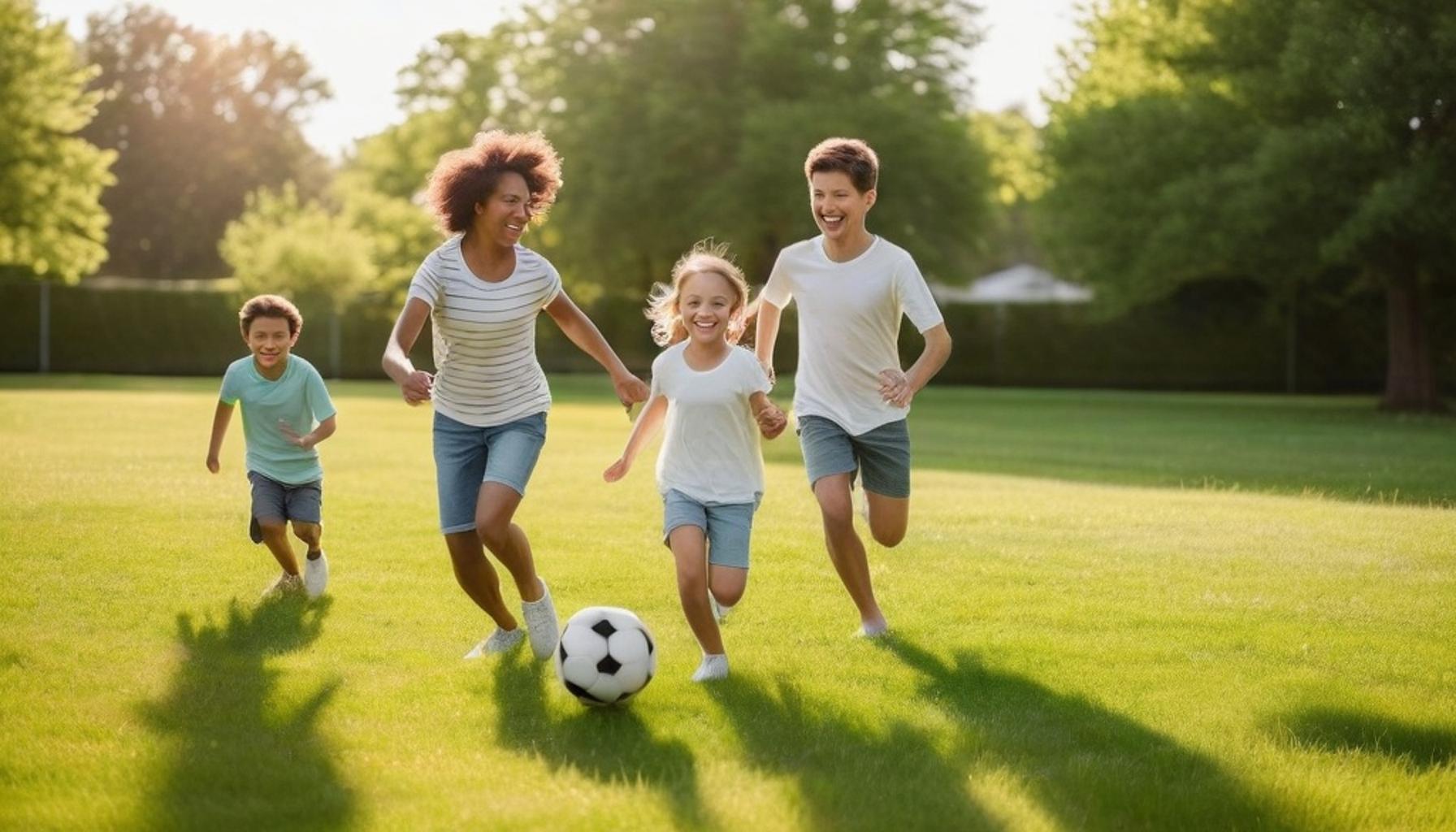
Finding fun family fitness activities doesn’t require expensive gym memberships or elaborate equipment. Sometimes the best ways to stay active as a family involve nothing more than a soccer ball, a hiking trail, or a living room dance party. Whether you live near national parks in Colorado or in a compact apartment in Brooklyn, opportunities for movement exist right outside your door.
Ahead, discover practical family workout ideas tailored to different age groups and interests. We’ll break down how building healthy habits for families can fit seamlessly into even the busiest weekly routines, offering realistic solutions rather than unattainable fitness fantasies.
LEARN MORE: The importance of regular physical activity in mental health and stress reduction
# Family Physical Activity: Building Bonds and Healthy Habits Together
Finding Your Family’s Activity Sweet Spot
Not every household looks the same, and neither should their approach to Family Physical Activity. A family with toddlers has vastly different needs than one with teenagers juggling homework and social lives. The key is matching activity choices to your family’s actual rhythm, not some idealized version of fitness.
Consider the Martinez family in Phoenix, Arizona. With two working parents and three kids ranging from age 5 to 14, finding common ground seemed impossible until they started “Sunday Sweat Sessions.” Thirty minutes of backyard obstacle courses, rotating who designs the course each week. No expensive equipment, just cones, jump ropes, and imagination.
Similar stories are popping up across the country. In Minneapolis, the Okafor family swapped their usual Saturday morning cartoons for neighborhood bike rides, discovering along the way that their youngest son had a natural talent for spotting wildlife they’d never noticed before. These small shifts in routine often reveal unexpected rewards, turning ordinary weekends into something families actually look forward to.
Age-Appropriate Approaches That Actually Work
Pediatric exercise specialists emphasize that fun family fitness activities should evolve as children grow. What thrills a six-year-old will likely bore a twelve-year-old.
Here’s how activity preferences typically shift by developmental stage:
- Ages 3-6: Simple games like tag, obstacle courses, and animal-movement challenges (hop like a bunny, walk like a crab)
- Ages 7-10: Structured play including bike rides, swimming, and beginner sports leagues
- Ages 11-14: Team-based activities, hiking challenges, and introduction to family workout ideas involving light resistance training
- Ages 15-18: Collaborative fitness goals, such as training for a 5K together or trying rock climbing
This isn’t about rigid categorization. Plenty of families successfully blend age groups through activities like ultimate frisbee or neighborhood scavenger hunts, where older siblings often become enthusiastic mentors to younger ones. Some communities have even started organizing multi-generational fitness meetups at local parks, where grandparents join in on walking challenges while parents and kids tackle more energetic games nearby.
Regional differences matter too. Families in coastal states might gravitate toward paddleboarding or beach volleyball, while those in mountain regions like Colorado often build entire weekend traditions around hiking trails and seasonal skiing. Urban families in cities like Chicago or New York frequently turn to community recreation centers, rock climbing gyms, or even rooftop yoga sessions to squeeze movement into tight schedules.
The Science Behind Shared Movement
A 2022 study from the Journal of Physical Activity and Health tracked 340 families over eighteen months. Results showed households engaging in structured activity together at least three times weekly reported 32% higher satisfaction scores in family relationship quality compared to those who exercised separately or not at all.
Dr. Sarah Chen, a pediatric health researcher based in Seattle, notes that the mechanism isn’t complicated. “When families move together, they’re forced into face-to-face interaction without the distraction of screens or daily stressors. It creates natural conversation opportunities that don’t happen at the dinner table.”
This research reinforces what many parents intuitively sense: the benefits of family exercise reach far deeper than physical health metrics. They’re building communication patterns and trust that carry into other areas of family life, from handling conflicts to celebrating achievements together.
Perhaps most compelling is the ripple effect these habits create. Children who grow up associating movement with connection and joy, rather than obligation, tend to carry those same attitudes into adulthood, according to Dr. Chen’s ongoing research. That’s a legacy worth chasing, one backyard obstacle course or neighborhood bike ride at a time.

LEARN MORE: The relationship between physical activity and quality sleep: how exercise can improve your rest
Overcoming Common Barriers to Staying Active Together
Busy schedules, tight budgets, and mismatched energy levels top the list of reasons families give for skipping shared workouts. Yet most obstacles have surprisingly simple workarounds once you know where to look.
Take cost concerns, for example. A 2023 survey by the National Recreation and Park Association found that 68% of American families believe fitness activities require expensive equipment or gym memberships. In reality, some of the most effective family workout ideas cost nothing at all.
Budget-Friendly Ways to Stay Active as a Family
Local parks departments across the country offer free community programs specifically designed for households looking to move more without spending money. These options work well for families testing the waters:
- Community walking trails: Most U.S. cities maintain free public trails, often with fitness stations built directly into the path
- School track access: Many public schools open their tracks to residents during non-school hours
- DIY yard circuits: Household items like laundry baskets and broomsticks can substitute for cones and agility poles
- Library fitness kits: Some public library systems, including branches in Austin and Denver, now lend out jump ropes, resistance bands, and pedometers
Time constraints present a trickier challenge. Families juggling work schedules, sports practices, and school events often struggle to find even fifteen consecutive free minutes. Fitness coaches increasingly recommend “activity stacking,” attaching movement to tasks already on the calendar. Walking the dog becomes a family loop around the block. Grocery runs turn into parking-lot-farthest-spot challenges.
When Family Members Have Different Fitness Levels
Mismatched abilities create another common friction point. A parent training for a half-marathon and a seven-year-old with shorter legs simply won’t move at the same pace.
Adaptive approaches solve this without leaving anyone behind. Bike rides can include a slower rider setting the pace while others loop back periodically. Hiking trails with varied terrain let faster family members take side paths while still staying within earshot of the group.
Physical therapists working with multi-generational households often suggest activities with built-in flexibility, like swimming, where each person can work at their own intensity while still sharing the same pool and the same conversation.
Technology’s Role in Building Healthy Habits for Families
Fitness apps designed for group accountability have gained traction recently. Platforms like Strava and Fitbit now offer family challenge features, letting households track combined steps or compete in friendly weekly totals.
Some families report that gamifying activity, turning step counts into point systems with small rewards, keeps younger kids engaged longer than traditional encouragement alone. A household in Austin, Texas, created a point board where earned points translate into choosing the next family outing, whether that’s a hike, a trip to a splash pad, or a bowling night.
These tools work best as supplements rather than replacements for genuine interaction. The screen can track the miles, but it’s the shared laughter mid-jog that actually strengthens family ties.
LEARN MORE: The importance of physical activity for mental health: how exercise can reduce anxiety and depression
Making Movement a Lasting Family Tradition
Family physical activity was never really about perfect step counts or matching workout gear. It’s about carving out pockets of time where generations move, laugh, and occasionally trip over the dog together.
The research is clear on why this matters. Households that prioritize shared movement report stronger communication, fewer screen-time conflicts, and children who carry those habits into adulthood. The benefits of family exercise extend well past the physical, touching everything from mental health to how families resolve everyday friction.
What separates households that stick with it from those that quit by February isn’t willpower. It’s flexibility.
The families who succeed treat activity as something adaptable rather than rigid. They swap a rained-out bike ride for an indoor dance session. They let a tired toddler ride in a wagon during what was supposed to be a family jog. This kind of built-in flexibility, more than any single piece of equipment or app, keeps momentum alive year after year.
Starting Small Still Counts
Nobody needs a five-year fitness plan to begin. A single walk after dinner this week is enough of a starting point.
Consider trying just one of the ways to stay active as a family covered here, whether it’s a free community trail, a weekend scavenger hunt, or a simple point system for younger kids. Small, repeatable actions tend to outlast ambitious ones that fizzle out by week three.
Communities across the country, from library fitness kits in Denver to school track access in countless towns, are quietly making it easier than ever to get moving without spending a dime.
The real question left for households to answer isn’t whether they have time or money. It’s whether they’re ready to treat healthy habits for families as something built together, one ordinary evening at a time.
Frequently Asked Questions
How many minutes of family physical activity should we aim for each week?
Kids and teens should get at least 60 minutes of moderate to vigorous activity daily, while adults need at least 150 minutes per week. A realistic family goal is scheduling 3-4 shared active sessions of 30-45 minutes weekly, then building up from there. Consistency matters more than intensity when you’re just starting out.
What are some easy family physical activity ideas for busy weeknights?
Try a 20-minute after-dinner walk, a backyard game of tag or frisbee, or a quick dance party in the living room. Bike rides around the neighborhood or a family stretching session while watching TV also work well. The key is picking something that fits your existing schedule so it doesn’t feel like an extra chore.
How can I get a reluctant teenager involved in family physical activity?
Let teens pick activities they actually enjoy, like rock climbing, basketball, or hiking, rather than forcing family favorites on them. Inviting a friend along or turning it into a friendly competition can boost buy-in significantly. Respecting their autonomy while still showing up consistently often works better than pressure.
What equipment do I really need to start being active as a family?
You don’t need much to begin; comfortable shoes, water bottles, and maybe a ball or jump rope are enough for most activities. Many effective family workouts, like walks, hikes, or bodyweight games, require zero equipment at all. As interest grows, you can invest in bikes, sports gear, or a basic home gym setup.
How does family physical activity actually strengthen relationships?
Moving together creates shared experiences and unscripted conversation time that’s harder to find during screen-based downtime. Physical activity also releases endorphins, which can improve mood and reduce household tension for everyone involved. Over time, these repeated positive experiences build trust and a sense of teamwork among family members.
What’s the best way to keep young kids engaged during family physical activity?
Turn activities into games with simple rules, like scavenger hunt walks, obstacle courses, or animal-themed movement challenges. Keeping sessions short, around 15-20 minutes, and rotating activities frequently helps maintain their attention. Praising effort rather than performance also keeps young kids motivated to keep participating.

Linda Carter
Linda Carter is a writer specializing in healthy habits and balanced living. With extensive experience helping readers build sustainable routines, she shares practical guidance on nutrition, physical activity, quality sleep, stress management, and emotional well-being. Her goal is to offer simple, accessible strategies that inspire people to care for their health and enjoy a more balanced life.