Technology and Sleep: Strategies to Minimize Blue Light Exposure Before Sleep
The Hidden Cost of Late-Night Screen Time
It’s 11 p.m., and you’re scrolling through your phone one last time before bed. That “quick check” of emails or social media might be doing more damage than you realize.
Blue light and sleep have a complicated relationship, one that most Americans experience every single night without fully understanding it.
Why This Matters More Than Ever
The average American now spends over 7 hours a day staring at screens, according to recent studies on digital habits. Smartphones, laptops, tablets, and televisions all emit blue light, a specific wavelength that interferes with the body’s natural sleep-wake cycle.
The effects of blue light on sleep are well-documented by researchers, and the science points to one clear culprit: melatonin suppression.
- Blue light exposure at night can delay melatonin release by up to 90 minutes
- Screen use before bed is linked to shorter, lower-quality sleep
- Chronic exposure may disrupt long-term circadian rhythms
A Nation Wired at Night
Walk into any bedroom across the country after dark, and chances are you’ll find a glowing screen nearby. From binge-watching the latest streaming series to answering one more work email, Americans have normalized falling asleep with a device inches from their face. What used to be a bedtime ritual involving a book or dim lamp has been replaced by endless scrolling, notifications, and autoplay features designed to keep eyes glued to the screen.
This shift hasn’t happened in a vacuum. Workplaces increasingly expect after-hours availability, streaming platforms release binge-worthy content, and social media algorithms are engineered to hold attention as long as possible. The result is a population that’s more connected than ever, but potentially more sleep-deprived because of it.
Sleep specialists have noted a troubling pattern: people who report using screens within an hour of bedtime consistently show delayed sleep onset and more frequent nighttime awakenings compared to those who avoid screens during that window.
What You’ll Discover in This Guide
The good news? You don’t have to abandon your devices completely to protect your sleep.
This article explores practical, science-backed ways to minimize blue light exposure without sacrificing modern convenience. From simple settings adjustments to blue light blocking strategies that fit seamlessly into your evening routine, we’ll break down exactly how to reduce blue light at night.
Understanding the connection between technology and sleep health is the first step toward waking up feeling genuinely rested.
SEE ALSO: The Importance of Sleep Routine: How Consistency Can Transform Your Health and Well-Being
# The Science Behind Blue Light’s Grip on Your Sleep Cycle
To truly minimize blue light exposure, it helps to understand what’s happening inside your body every time you glance at a screen after sunset. This isn’t some fringe wellness theory circulating on social media. It’s measurable biology, backed by decades of sleep research and increasingly relevant as Americans spend more waking hours staring at screens than any generation before them.
Your brain contains a master clock called the suprachiasmatic nucleus, which regulates when you feel sleepy and when you feel alert. This internal clock relies heavily on light cues from your environment, particularly wavelengths in the blue spectrum, ranging from 450 to 495 nanometers. Think of it as your body’s built-in sundial, one that evolved over hundreds of thousands of years without ever encountering a smartphone.
Before electricity, humans experienced natural darkness after sunset, which cued the pineal gland to release melatonin. Today’s LED screens emit concentrated blue wavelengths that mimic daylight, essentially tricking your brain into thinking it’s still afternoon, even at midnight.
How Blue Light Disrupts Your Body’s Natural Signals
Specialized cells in the retina, called intrinsically photosensitive retinal ganglion cells, are especially sensitive to blue light. When these cells detect blue wavelengths, they send signals directly to the brain’s circadian control center, suppressing melatonin production almost immediately, sometimes within minutes of exposure.
Research from Harvard Medical School found that blue light and sleep disruption occurs more intensely than with any other light color on the visible spectrum. Participants exposed to blue light before bed took significantly longer to fall asleep compared to those exposed to red light of similar intensity. Some studies suggest the delay in melatonin onset can stretch beyond an hour.
The effects of blue light on sleep extend beyond just difficulty falling asleep. Consider what else researchers have documented:
- Reduced total REM sleep, the stage critical for memory processing
- Increased nighttime awakenings due to lighter overall sleep stages
- Next-day grogginess despite logging a full eight hours in bed
- Long-term circadian misalignment linked to metabolic changes
Not All Screens Are Created Equal
Here’s something many people don’t realize: your smartphone likely emits more concentrated blue light than your television.
Smaller screens held close to the face deliver light directly into the eyes at higher intensity, while larger screens viewed from across a room diffuse that same light over greater distance. This explains why scrolling on a phone in bed often feels more stimulating than watching a show on a living room television, even during the same late-night hour.
Understanding this distinction matters for anyone serious about technology and sleep health. It’s not just about screen time overall, but about which devices, at what distance, and for how long before you intend to close your eyes for the night. A quick email check on a laptop might carry different consequences than an hour of doomscrolling six inches from your face.

Practical Approaches to Reduce Blue Light at Night
Understanding the effects of blue light on sleep is only the first step. The real challenge lies in applying practical, science-backed blue light blocking strategies that fit into daily routines. From simple device adjustments to lifestyle changes, each approach plays a role in supporting technology and sleep health. Below is a quick reference table summarizing the most effective ways to minimize blue light exposure and improve rest quality.
| Strategy | Impact on Sleep Quality |
|---|---|
| Night Mode Settings | Shifts screen tones to warmer hues, reducing melatonin suppression by up to 58%. |
| Blue Light Glasses | Filters harmful wavelengths, helping reduce blue light at night exposure directly. |
| Digital Curfew | Stopping screen use 60–90 minutes before bed supports natural circadian rhythm. |
| Ambient Lighting | Dim, warm-toned bulbs minimize overall blue light and sleep disruption. |
LEARN MORE: The Importance of Sleep Routine: Creating a Favorable Environment for Rest
# Practical Blue Light Blocking Strategies That Actually Work
Knowing the science is one thing. Doing something about it at 10 p.m. when you’re mindlessly refreshing your feed is another challenge entirely. Fortunately, there are proven, research-backed ways to reduce blue light at night without giving up your devices altogether.
Night mode settings have become standard on nearly every smartphone, tablet, and laptop sold in the United States. Apple’s Night Shift, Android’s Night Light, and Windows’ similar features shift screen output toward warmer amber tones, reducing blue wavelength emission by an estimated 30 to 60 percent depending on the intensity setting chosen.
These built-in tools aren’t perfect substitutes for darkness, but they represent a meaningful first line of defense for anyone unwilling to part with their evening scrolling habit. What makes them particularly appealing is convenience: most systems allow users to schedule automatic activation at sunset, meaning the shift happens without requiring nightly manual adjustments. For habitual late-night texters, streamers, and social media browsers, that kind of passive protection matters far more than it might initially seem.
Blue Light Blocking Glasses: Do They Deliver?
Amber-tinted blue light blocking glasses have exploded in popularity, with sales in the U.S. eyewear market climbing steadily since 2019. A study published in Chronobiology International found participants who wore blue light blocking glasses for two hours before bed experienced improved sleep quality and higher melatonin levels compared to those wearing clear lenses.
Not every pair on the market performs equally, though. Cheaper models sometimes filter minimal blue wavelength percentages, while clinical-grade amber lenses can block upward of 90 percent. Checking third-party lab testing before purchasing makes a real difference, since marketing claims on packaging aren’t always backed by independent verification. Shoppers browsing retailers like Amazon or specialty optical shops should look specifically for lenses tested against ANSI or ISO standards rather than relying on vague phrases like “blocks harmful light.”
Price alone isn’t always a reliable indicator either. Some mid-range brands have outperformed pricier competitors in transmission testing, which is why consumer advocacy sites and independent lab comparisons have become such valuable resources before making a purchase.
Redesigning Your Evening Routine Around Light
Beyond gadgets and glasses, timing and environment play an equally powerful role in technology and sleep health.
Sleep specialists commonly recommend a digital sunset, a designated cutoff time roughly 60 to 90 minutes before bed when screens get set aside entirely. During this window, consider:
- Switching household lighting to warm, dim bulbs rated below 2700 Kelvin
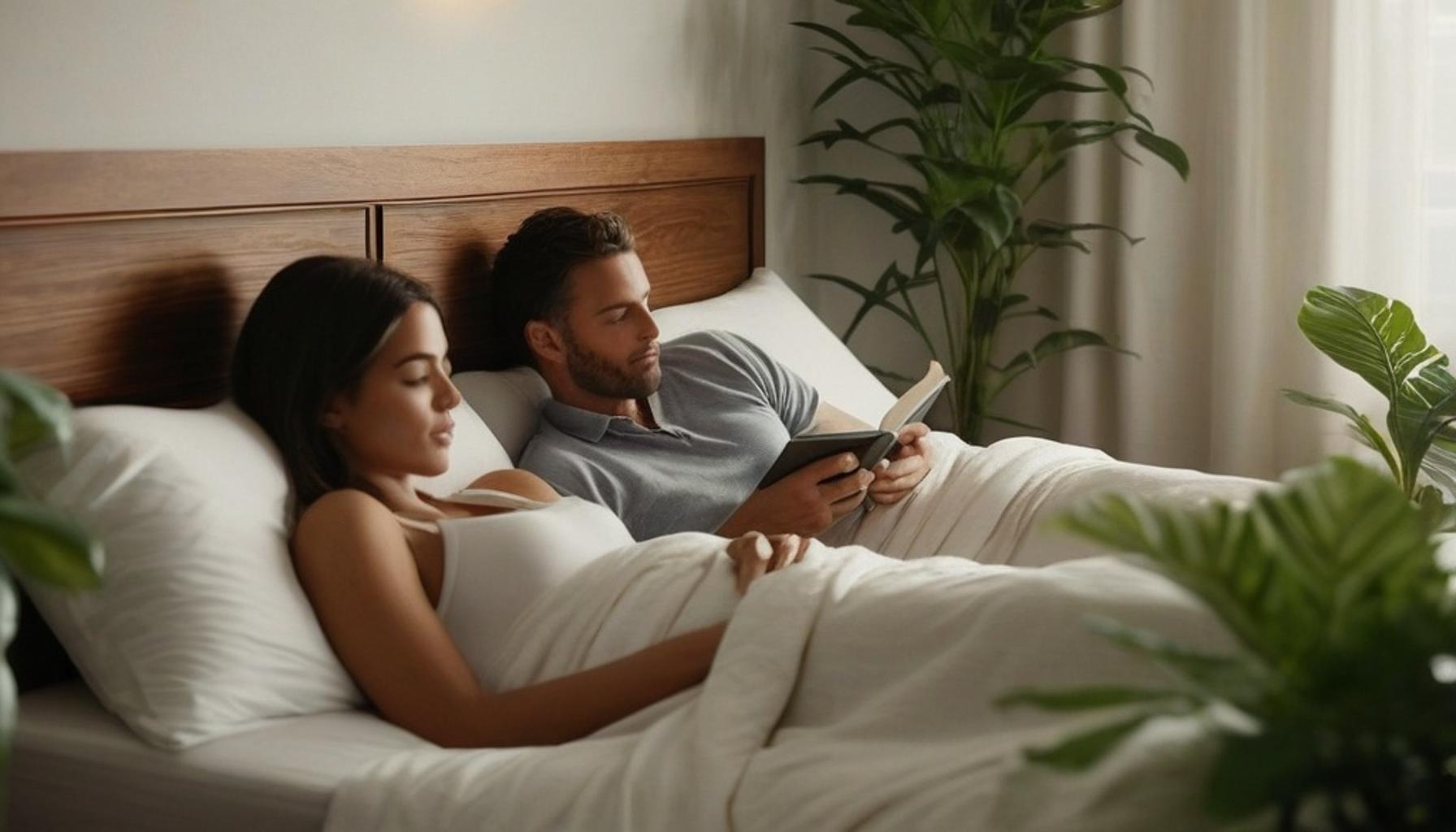
- Reading a physical book or listening to an audiobook instead of scrolling
- Using blackout curtains to prevent streetlights or neighboring windows from adding stray light
- Charging phones outside the bedroom to remove temptation altogether
For those who can’t fully disconnect, since checking work email or monitoring a sleeping baby monitor app is sometimes non-negotiable, lowering screen brightness manually to the lowest comfortable level adds another layer of protection. Positioning the device farther from the eyes and holding it at a downward angle rather than straight-on can also modestly cut exposure.
Combining several of these blue light blocking strategies tends to produce better results than relying on any single fix. Night mode alone might not counteract an hour of bright-screen scrolling, but paired with dimmed lighting, amber glasses, and an earlier digital cutoff, the cumulative effect on melatonin production becomes far more noticeable within just a week or two of consistent practice. Many people who track their sleep using wearable devices report measurable improvements in deep sleep duration once these habits stack together consistently, offering a compelling incentive to experiment and see what actually moves the needle personally.
YOU MAY ALSO LIKE: How Technology Affects Your Sleep: Tips for Healthy Use
The Bigger Picture on Blue Light and Sleep
Screens aren’t disappearing from American bedrooms anytime soon, and pretending otherwise isn’t a realistic strategy. What actually works is treating light exposure as something manageable rather than inevitable.
Throughout this piece, one theme keeps surfacing: small, layered adjustments outperform dramatic, unsustainable overhauls. Night mode settings, amber-tinted glasses, warmer bulbs, and a consistent digital sunset each chip away at the problem individually. Stacked together, they form a genuinely effective shield against the effects of blue light on sleep that so many households underestimate.
It’s worth remembering that the goal isn’t perfection. Missing a night of dimmed lighting or forgetting glasses on the couch won’t undo progress built over weeks. Consistency, not rigidity, is what shifts melatonin patterns and sleep quality over time.
There’s also a broader takeaway here about technology and sleep health in general: awareness alone rarely changes behavior, but small environmental tweaks often do. Charging a phone in the kitchen instead of the nightstand, or swapping one scrolling session for a paperback, requires little effort yet produces outsized results.
As more research emerges on circadian rhythms and screen habits, expect updated guidance, new lens technologies, and possibly stricter industry testing standards for blue light claims. For now, readers interested in blue light blocking strategies have more accessible tools than ever to experiment with.
Anyone serious about learning how to minimize blue light exposure should start small: pick one or two changes, track how sleep responds over a week or two, and build from there. The data, and likely your own body, will make the benefits obvious soon enough.
Frequently Asked Questions
How many hours before bed should I stop using my phone to minimize blue light exposure?
Most sleep experts recommend powering down screens at least 1 to 2 hours before bedtime to give your brain time to naturally increase melatonin production. If that’s not realistic, switching to night mode and dimming brightness during that window can still meaningfully reduce the impact. Even a 30-minute screen-free buffer before sleep can make a noticeable difference for many people.
Do blue light glasses actually work to reduce blue light exposure before sleep?
Blue light blocking glasses can help filter out a portion of the blue wavelengths emitted by screens, and some studies show they modestly improve melatonin levels and sleep quality when worn in the evening. However, they work best combined with other strategies like reduced screen brightness and using night mode settings. Not all glasses are equally effective, so look for ones specifically tested to block wavelengths in the 450-480 nanometer range.
Does turning on ‘Night Shift’ or ‘Night Mode’ on my phone really minimize blue light exposure?
Yes, these built-in features shift your screen’s color temperature toward warmer amber and red tones, which reduces blue light emission by a measurable amount, though not entirely. They’re a convenient first step, but pairing them with lower screen brightness and shorter usage time before bed maximizes the benefit. Keep in mind these settings don’t eliminate blue light completely, so they shouldn’t be your only strategy.
What are the best alternatives to scrolling on my phone before bed to avoid blue light?
Reading a physical book, listening to a podcast or audiobook, journaling, or doing light stretching are excellent screen-free alternatives that support winding down. These activities help signal to your body that it’s time to relax without exposing your eyes to disruptive blue wavelengths. Swapping even one nightly scrolling session for one of these habits can improve sleep onset over time.
Can dimming my bedroom lights help if I still need to use a screen before sleep?
Yes, using warm, dim ambient lighting in your bedroom alongside a lowered screen brightness reduces overall light stimulation reaching your eyes. Combining this with your device’s night mode setting further minimizes blue light exposure when screen use is unavoidable. Avoid overhead white or bright LED lighting in the hour before bed for the best results.
How does blue light exposure at night actually affect my sleep quality?
Blue light suppresses melatonin, the hormone responsible for signaling sleepiness, more strongly than other light wavelengths, which can delay your body’s natural sleep-wake cycle. This delayed melatonin release makes it harder to fall asleep and can reduce overall sleep quality even if you eventually doze off. Consistent nightly exposure can also gradually shift your circadian rhythm later over time, worsening the effect.

Linda Carter
Linda Carter is a writer specializing in healthy habits and balanced living. With extensive experience helping readers build sustainable routines, she shares practical guidance on nutrition, physical activity, quality sleep, stress management, and emotional well-being. Her goal is to offer simple, accessible strategies that inspire people to care for their health and enjoy a more balanced life.